
How to Choose the Right Aesthetic Laser for Your Clinic
An aesthetic laser is one of the largest investments a clinic will make, and one of the hardest to undo. The right device becomes a reliable revenue line for years. The wrong one sits in the corner, underused, while finance payments continue.
Most poor purchases come from the same mistake: starting with the machine instead of the clinic. So how do you choose an aesthetic laser that fits? This guide walks through how to choose an aesthetic laser in a logical order, from your treatment menu and patients to technology, compliance, support and cost, so you can compare options with confidence.
Start with the treatments you want to offer
Aesthetic laser selection should begin with your treatment menu, not a brochure. List the treatments you plan to offer in year one, and the ones you expect to add in years two and three. Common indications include:
- Hair removal
- Pigmentation and sun damage
- Vascular concerns such as redness and thread veins
- Skin rejuvenation, texture and fine lines
- Acne scarring and resurfacing
- Tattoo removal
Each indication relies on different wavelengths, pulse durations and handpieces. Once your menu is clear, you can rule out devices that cannot deliver it, and avoid paying for capabilities you will never use. Our guide to the first five equipment decisions for a new aesthetic clinic covers menu planning in more detail.
Understand the main laser technologies
A laser device for aesthetic treatments works by targeting a specific chromophore in the skin, such as melanin, haemoglobin or water. The wavelength decides what the laser targets and how deep it reaches. As a general guide:
| Technology | Typical wavelength | Common uses |
|---|---|---|
| Alexandrite | Around 755nm | Hair removal and pigmentation, mainly on lighter skin types |
| Diode | Around 800 to 810nm | Hair removal across a broad range of skin types |
| Long-pulse Nd:YAG | 1064nm | Hair removal on darker skin types, vascular treatment and non-ablative rejuvenation |
| Q-switched and picosecond Nd:YAG | 1064nm and 532nm | Pigmentation and tattoo removal |
| Er:YAG | 2940nm | Ablative and fractional resurfacing, texture and scarring |
| IPL (not a laser) | Broad spectrum light | Broad-area redness and lighter pigmentation |
These are general categories. Results also depend on pulse duration, energy, spot size, repetition rate and cooling, so two devices with the same wavelength can perform very differently. For treatment-specific guidance, see our guides on laser hair removal wavelengths, skin rejuvenation equipment and tattoo removal lasers.
Match the laser to your patients
The best laser on paper is not the best laser for your clinic if it does not work well for your patients. Skin type has a major effect on both safety and results.
- Know your patient mix. Australian metropolitan clinics often see a wider range of Fitzpatrick skin types than expected, including types IV to VI.
- Check safety on darker skin. Longer wavelengths such as 1064nm Nd:YAG are generally a better match for darker skin types, while shorter wavelengths carry more risk of pigment-related side effects.
- Think about tolerability. Integrated cooling and comfortable handpieces help patients complete their course of treatments.
Specialist device or multi-application platform?
This is one of the biggest decisions when choosing aesthetic laser equipment.
A specialist device fits when:
- Your clinic focuses on one high-volume treatment, such as hair removal
- You want simple operation and fast treatment times
- You have room for separate devices as you grow
A multi-application platform fits when:
- Floor space is limited
- You plan to expand your treatment menu over the next few years
- You want to offer several indications from one console
- You are prepared for more in-depth training
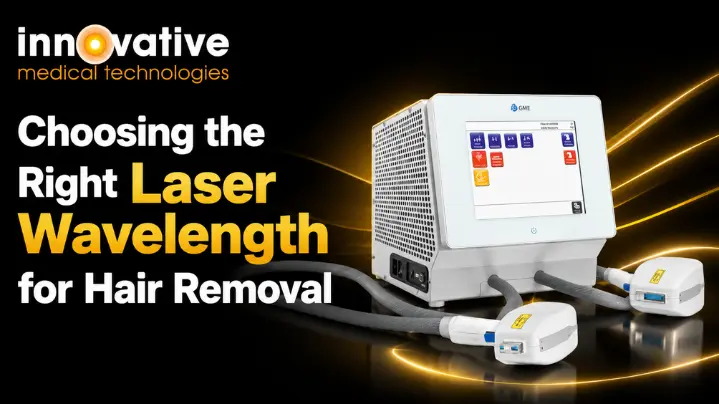
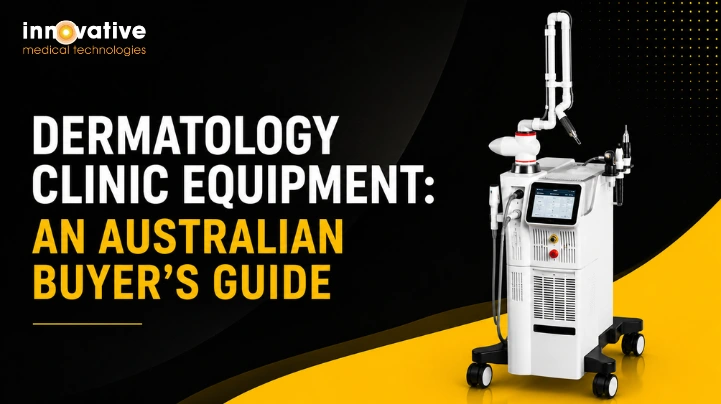
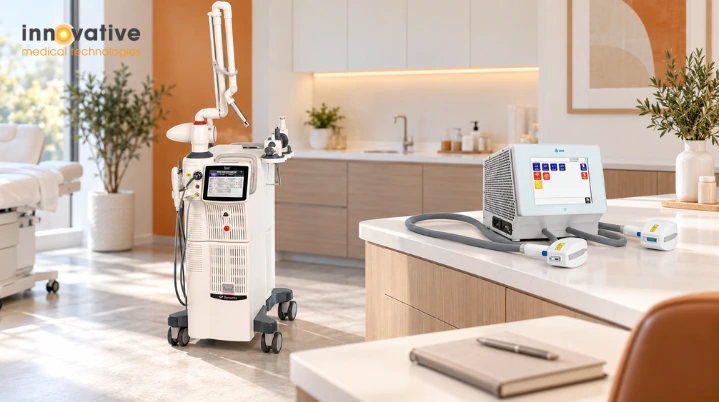
For example, the GME TwinScan is a purpose-built hair removal system, while the Fotona SP Dynamis Pro combines Er:YAG and Nd:YAG wavelengths for a range of aesthetic indications from one platform.
Look beyond the headline specifications
Specification sheets can be hard to compare. Focus on the factors that affect real clinic performance:
- Treatment speed. Scanners, spot sizes, and repetition rates affect how long each appointment takes.
- Handpieces and upgrades. Check whether new handpieces or modules can be added later, and what they cost.
- Clinical evidence. Ask for published studies and Australian clinical case examples, not just marketing claims.
- Reliability. Ask other clinics about uptime and real-world performance.
- Ease of use. Intuitive software and preset protocols help new staff work safely and consistently.
Compliance, licensing and laser safety
In Australia, a medical device must be included on the Australian Register of Therapeutic Goods (ARTG) before it can be supplied. ARTG inclusion does not mean every treatment mentioned overseas is approved, so check the device’s intended purpose.
There is no single national framework for cosmetic laser use. Requirements are set by individual states and territories, and some, including Queensland, Western Australia and Tasmania, have specific licensing for cosmetic laser use. Clinics should also plan for laser safety training, eye protection, controlled treatment areas and documented procedures. Check current requirements with your state or territory radiation regulator before you buy.
Our guide to buying medical laser equipment in Australia explains ARTG, laser safety and licensing in more detail.
Training and supplier support
When working out how to choose an aesthetic laser supplier, remember a laser is only as good as the people using it and the support behind it. Before choosing a supplier, ask:
- What initial training is included, and is it hands-on?
- Is training available for new staff and as refresher sessions?
- Where are the service engineers based, and how quickly can they respond?
- Are spare parts held in Australia?
- What happens if the device cannot be repaired straight away?
- What clinical support is available if treatment results are not as expected?
The supplier relationship will last as long as the device, often five to ten years, so it deserves as much attention as the laser itself.
Work out the total cost of ownership
The purchase price is only part of the cost. When comparing aesthetic laser selection options, include:
- Additional handpieces, modules and consumables
- Servicing, maintenance and warranty after the first year
- Training for current and future staff
- Laser safety and compliance costs
- Finance and insurance
- Downtime if the device is out of action
Then compare this with realistic treatment numbers and pricing. A laser that matches your demand will usually deliver a better return than one with more features than you need.
A quick checklist for choosing aesthetic laser equipment
- Treatments: Does it deliver your year-one menu and support your growth plan?
- Patients: Is it safe and effective for your patients’ skin types?
- Technology: Are the wavelengths, pulse options and cooling right for your indications?
- Platform: Do you need a specialist device or a multi-application system?
- Compliance: Is it on the ARTG, and do you understand your state’s licensing requirements?
- Training: Is practical, device-specific training included?
- Support: Is local service and clinical support available?
- Cost: Have you calculated the total cost of ownership against realistic demand?
Final thoughts
Knowing how to choose an aesthetic laser comes down to asking the right questions in the right order. Start with your treatments and patients, then compare technologies, platforms, compliance, training and long-term costs. The best device is the one that fits your clinic today and can grow with it.
Innovative Medical Technologies is the exclusive Australian distributor of Fotona and GME aesthetic laser systems and has supported Australian clinics since 2007. If you are comparing options, our team can talk through your treatment menu, patient mix, space and growth plan, and help you build a shortlist. You can also see the technology in person at one of our training events or an Aesthetic Discovery Day.
Frequently Asked Questions
What is the most versatile aesthetic laser?
Multi-application platforms that combine several wavelengths, such as Er:YAG and Nd:YAG, can treat a wide range of indications from one console. The right choice still depends on your treatment menu and patients.
Which laser is best for darker skin types?
Longer wavelengths, particularly 1064nm Nd:YAG, are generally considered a better match for darker skin types. Device settings, cooling and operator training also play a major role in safety.
Do I need a licence to operate an aesthetic laser?
It depends on your state or territory. Some, including Queensland, Western Australia and Tasmania, have specific licensing for cosmetic laser use. Check with your local radiation regulator.
Should I buy a specialist device or a multi-application platform?
A specialist device is often best for one high-volume treatment, while a multi-application platform is better for clinics with limited space or a growing treatment menu.
Can I see a laser in action before buying?
Yes. A demonstration lets you see the device, handpieces and software in use and ask questions about training and support before you commit.