
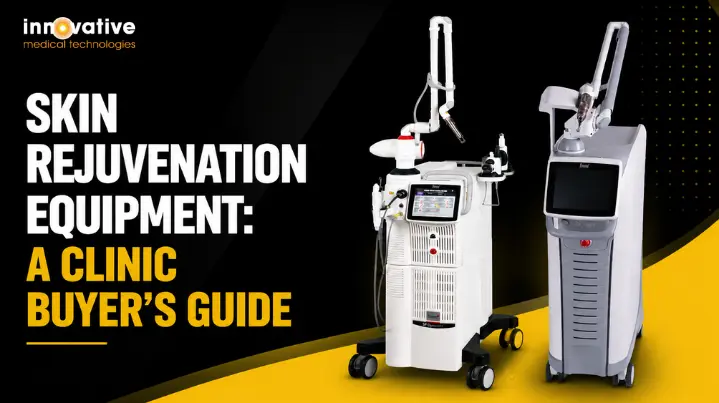
Skin Rejuvenation Equipment: A Clinic Buyer’s Guide
Skin rejuvenation has shifted from a niche aesthetic service to a core revenue line in most Australian clinics. The treatment menu typically covers pigmentation, vascular lesions, fine lines, texture, pores and overall radiance — and each indication has different equipment requirements.
If you are evaluating skin rejuvenation equipment for your clinic, this guide explains the main technology categories, what each one treats well, and how to think about platform choice for your patient mix.
The clinical indications you will treat
Skin rejuvenation is a broad category. In practice, the equipment needs to handle most of the following:
- Pigmentation and dark spots — sun damage, melasma, post-inflammatory hyperpigmentation
- Vascular lesions — telangiectasia, rosacea redness, broken capillaries
- Fine lines and wrinkles — non-ablative resurfacing
- Texture and pores — fractional treatments
- Overall radiance and skin tone — non-ablative rejuvenation and photofacial-style treatments
Few clinics treat every indication from day one. The first question is which indications you will offer in year one, and which you might add later.
The main technologies
Skin rejuvenation equipment falls into several broad technology categories. Each has strengths in different clinical areas.
Long-pulse Nd:YAG
Long-pulse Nd:YAG is one of the most clinically versatile lasers in aesthetics. It penetrates deeply, treats vascular lesions effectively, supports non-ablative skin rejuvenation, and adds hair removal capability for darker skin types as a secondary benefit.
Fotona’s SP Dynamis, distributed by Innovative in Australia and New Zealand, combines high-performance long-pulse Nd:YAG with surgical QCW Nd:YAG on one platform. This gives clinics a broad treatment range from hair removal and vascular work through to skin rejuvenation indications.
Q-switched and pico-power Nd:YAG
Q-switched and high-peak-power Nd:YAG platforms target pigmentation at the molecular level. They are the established choice for melasma, sun damage, post-inflammatory hyperpigmentation, and pigmented lesions — and they double as the workhorse for tattoo removal.
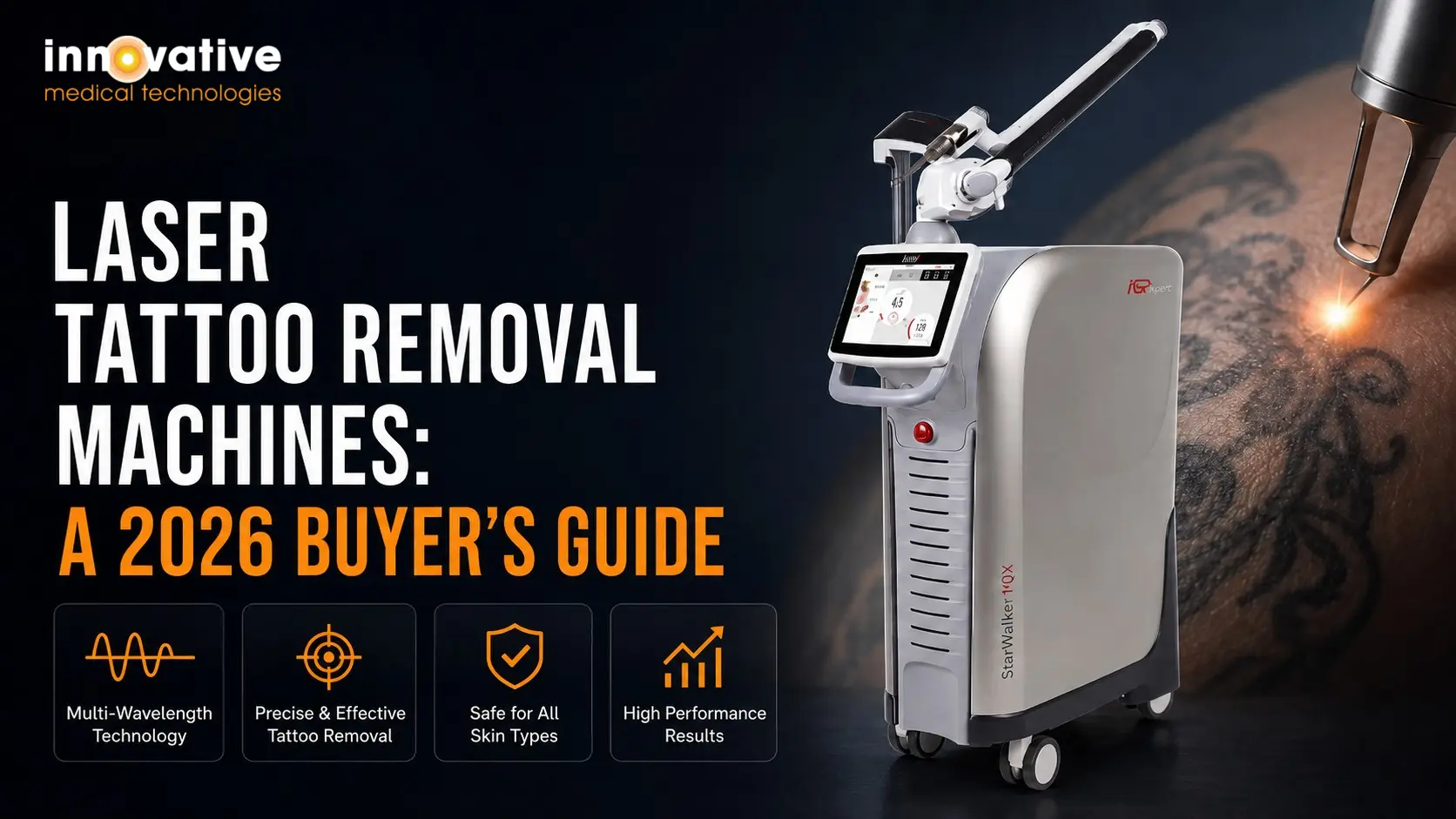
Innovative’s Fotona StarWalker, for example, includes VERSA3, FRAC3 and MaQX modalities and supports both pigmentation correction and skin revitalisation treatments alongside its primary tattoo removal capability.
Er:YAG and ablative resurfacing
Erbium:YAG (Er:YAG) is used for controlled ablative resurfacing. It removes a precise layer of skin, prompting the body to produce new collagen and resurface the treatment area. The trade-off is downtime — patients require recovery time after treatment, and the clinical risk profile is higher than non-ablative options.
Er:YAG sits at the more advanced end of the equipment investment. It is the right choice for clinics with dermatology-level training, established patient flow and a clinical interest in resurfacing as a core service line.
IPL (Intense Pulsed Light)
IPL is not a laser — it delivers a broad spectrum of light. For pigmentation, broken capillaries and overall skin tone improvement, IPL is widely used and clinically established. It is also less expensive to acquire and run than laser platforms.
Many clinics use IPL alongside laser systems rather than instead of them. IPL handles broad-area photofacials and lighter pigmentation work; laser handles the more clinical indications.
Single-application or multi-application platform
Skin rejuvenation is one of the strongest cases for a multi-application platform. The same Nd:YAG laser that handles vascular work also supports hair removal. The same Q-switched system that treats pigmentation also performs tattoo removal. Buying one platform that covers three or four revenue lines makes economic sense for clinics with limited floor space or expanding treatment menus.
The trade-offs are training depth (one team must learn more indications) and platform cost (multi-application platforms cost more upfront than single-purpose devices).
Matching equipment to your clinic
Three filters work for most clinics evaluating skin rejuvenation equipment.
What is your patient mix? Lighter-skinned patient bases tolerate more aggressive treatments. Darker-skinned populations require platforms with proven safety profiles for higher Fitzpatrick types, which generally means Nd:YAG-based equipment over Alexandrite or Diode.
What is your treatment menu? A clinic offering pigmentation, vascular and fine-line treatments needs different equipment to one focused on resurfacing or texture work.
What is your floor plan? A clinic with one treatment room benefits more from a multi-application platform than a clinic with three rooms and dedicated single-purpose devices in each.
Compliance and training
Like all Class 4 lasers, skin rejuvenation platforms require ARTG registration, completed laser safety training for every operator, and state-based licensing in QLD, WA, TAS and the ACT.
The compliance picture for skin rejuvenation has an additional consideration: many treatments are performed close to or on the face, where patient expectations are highest and visible complications can be damaging for a clinic. Training depth matters more here than in body-area work.
In summary: making the right equipment choice
Skin rejuvenation is one of the most flexible service lines a clinic can build. The technology choices interact in ways that benefit from a tailored conversation rather than a generic recommendation.
If you would like to discuss skin rejuvenation equipment options for your clinic — including how each technology maps to your patient mix, treatment menu and growth plan — our team will walk you through the options.