
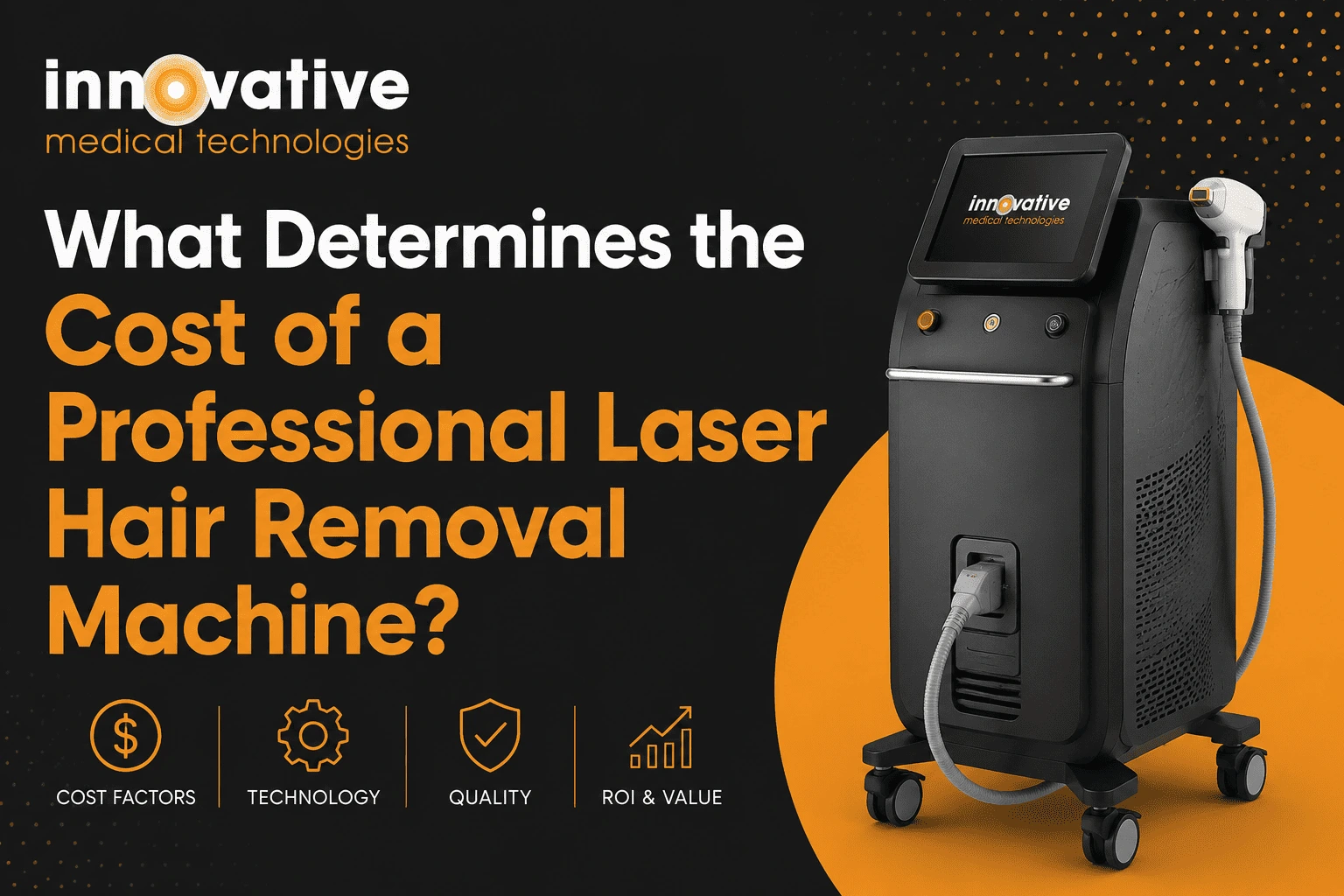
What Determines the Cost of a Professional Laser Hair Removal Machine?
The first question we get on most supplier calls isn’t about wavelengths or patient demographics. It’s: “How much?”
Fair question. Wrong frame.
After nearly two decades fitting out Australian clinics with laser equipment, we can tell you flatly: the purchase price of a professional laser hair removal machine is one of the least useful numbers in the buying decision. What matters is what the device costs you across five years — and what it returns. Two machines with identical sticker prices can have wildly different total costs of ownership. The cheaper option on paper is often the more expensive one in practice.
Here’s how to read the real picture.
What drives the price you see
Six factors do most of the work in setting where a professional laser hair removal machine sits on the price spectrum.
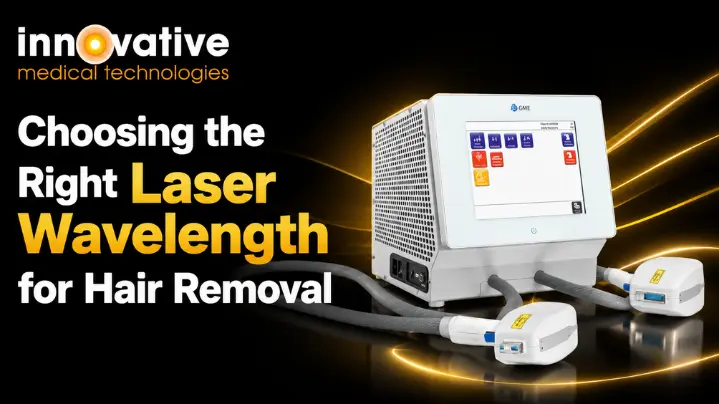
Wavelength configuration. Single-wavelength systems (Alexandrite, Diode or Nd:YAG alone) sit at the more accessible end. Dual-wavelength and multi-application platforms cost more because they include more laser sources, more cooling, and more capability in one console.
Scanner technology
The sliding-mode and linear-scanning systems in newer diode platforms add significant cost. They also enable the treatment speeds that make high-volume clinics profitable.
Cooling sophistication
Patient comfort is largely about cooling. Patented contact cooling, integrated tip cooling and active cryogen systems each represent meaningful engineering investment, which shows up in the price.
Brand and clinical validation
Devices backed by peer-reviewed clinical studies, regulatory clearances across multiple jurisdictions, and decades of refinement carry a premium. So they should.
Power output and longevity
Higher fluence ranges, longer pulse-duration options, and laser tubes engineered for higher shot counts before replacement are core differentiators between mid-market and premium platforms.
Training and support inclusions
Devices that ship with structured manufacturer-led training, ongoing clinical education and dedicated technical support are priced to reflect that. Devices that ship with a manual usually aren’t.
That last one matters more than buyers realise — and leads directly to the next section.
The costs that don’t appear on the quote
Here’s where clinics get caught out.
Annual service contracts
Most professional laser machines need scheduled servicing, calibration and preventive maintenance. Annual costs vary significantly between platforms.
Consumables
Cooling gel, handpiece tips, optical components, cryogen refills. Cheap devices often hide expensive consumables.
Handpiece replacement cycles
Some platforms have handpieces rated for very high shot counts. Others need replacement after a fraction of that, at significant cost.
Compliance and documentation
ARTG registration, laser safety officer documentation, state-specific licensing support. Reputable suppliers include this. Less reputable ones leave you to navigate it alone.
Downtime cost
This is the one nobody talks about. A device that fails twice in its first 18 months — and takes two weeks to repair each time — costs you far more in lost revenue than the cheaper purchase price ever saved you. Reliability isn’t a feature. It’s a financial line item.
Sticker price versus total cost
The right comparison isn’t “Device A is $X, Device B is $Y.”
The right comparison is: across five years of operation at my expected treatment volume, what does each device cost me to own and run — and what does it return in clinical outcomes and patient retention?
That comparison flips a lot of decisions. We’ve seen clinics save twenty percent on the purchase price of a machine and then spend forty percent of those savings on service contracts and consumables in year one alone. We’ve also seen clinics invest in a premium platform, get five trouble-free years out of it, and book payback well inside two years because patient experience kept rebooking rates high.
The number on the quote is the start of the conversation. Not the end of it.
What to ask every supplier
- If you’re collecting quotes, get every supplier to give you these numbers in writing:
- Year-one total cost (purchase + setup + training + first-year consumables)
- Year two to five service contract cost ranges
- Average handpiece lifespan and replacement cost
- Annual consumables spend at your target treatment volume
- Technical service response SLA in your state
- ARTG registration confirmation
Any supplier who can’t answer these – or wants to gloss over them – is telling you something important about what the next five years will look like.
Where to go from here
If you’d like to skip the quote-comparison spreadsheet and get a tailored business case for your clinic, our team will walk through realistic device options and full lifecycle costs based on your patient mix, treatment volume and growth plans.
Book a clinical consultation →
Thirty minutes with our team. We’ll model the total cost of ownership for the devices most relevant to your clinic — not just the sticker price.